

What if your next client never sees a single social media post? Learning how to get clients without social media starts with a simple shift: you don’t need to be constantly visible if the right people can find you, trust you, and understand how you can help.
If posting feels like a full-time job, you’re not alone in wondering whether your business can grow without it. The answer is yes, but replacing social media with a repeatable system matters more than simply choosing another channel. Referrals and networking can open doors, while search, partnerships, and direct conversations can turn interest into sales opportunities.
This guide will help you choose a small set of client-getting channels that fit your offer and capacity, then build a practical process for starting relevant conversations. You’ll also learn what to track so you can improve your approach without depending on algorithms. No constant posting required. Just clear offers, purposeful outreach, and consistent follow-through.
Key Takeaways
- Learn how to get clients without social media by connecting discoverability, trusted introductions, and clear offers into a repeatable system.
- Compare referrals, partnerships, search content, email, and direct outreach to find channels that fit your audience and capacity.
- Use a practical 30-day plan to define your approach, prepare key materials, start conversations, and review what’s working.
- Turn interest into a sales conversation by asking about a prospect’s needs before recommending an offer or next step.
- Track the signals that matter, from relevant inquiries to follow-ups, so you can improve your client-getting process without relying on platform algorithms.
How to Get Clients Without Social Media Starts with a Repeatable System
Social platforms can help people discover a business, but they’re only one route. If your pipeline depends on posting regularly, you may feel you have to stay visible just to stay in business. A stronger approach to how to get clients without social media connects four stages: discovery, trust, conversation, and a clear offer. Each stage gives a prospective client a reason to move forward, whether they find you in a search result, hear about you from a trusted contact, or receive a relevant direct message.
A client-acquisition system is a repeatable process that helps the right prospects discover you, build trust, start a sales conversation, and evaluate a clear offer. Attention alone doesn’t make someone a client. Visibility means someone encounters your name or content. A qualified lead is a person who appears to fit the audience you serve and has a relevant need. A sales conversation helps you understand that need and determine whether your offer fits. A client is someone who chooses to work with you.
Think of these as distinct steps, not interchangeable results. A website visit may create visibility, but it doesn’t tell you whether the visitor is a good fit. An introduction may produce a lead, but it still takes a useful conversation and a relevant offer to reach a decision. Lead generation covers the activities used to attract and identify prospective customers. Your system continues beyond that first sign of interest.
What does getting clients without social media actually involve?
It means choosing ways to meet prospects where they already look for help. Someone with an urgent, specific need may use a search engine. Someone considering a major decision may ask a colleague for a referral. A complementary business may introduce you to people who need your expertise, while direct contact can open a conversation when you have a relevant reason to reach out.
Build trust through useful information, thoughtful introductions, and follow-through. Then make it easy for an interested prospect to take a next step, such as replying to an email or booking a conversation. Keep contact details and follow-up records in tools you control, rather than relying only on a platform’s feed to distribute your message. The best channel connects your intended buyers with a credible reason to talk.
Why a clear offer matters before choosing a channel
Before you decide where to show up, get specific about whom you help, what problem you address, and what outcome your offer is designed to support. These details make it easier to recognize relevant prospects and explain why your solution may suit them. “I help small-business owners organize their finances” gives a potential buyer more to respond to than “I offer business services.”
A clear offer also sharpens your outreach. You can choose search topics your audience is likely to explore, identify referral partners who serve the same buyers, or write a direct message about a recognizable challenge. For a deeper look at shaping an offer people can understand and value, explore this guide to creating high-ticket offers. Define the audience and problem first, then choose channels that can bring the right people into a real conversation.
Four Ways to Find Prospects and Build Trust Without Social Platforms
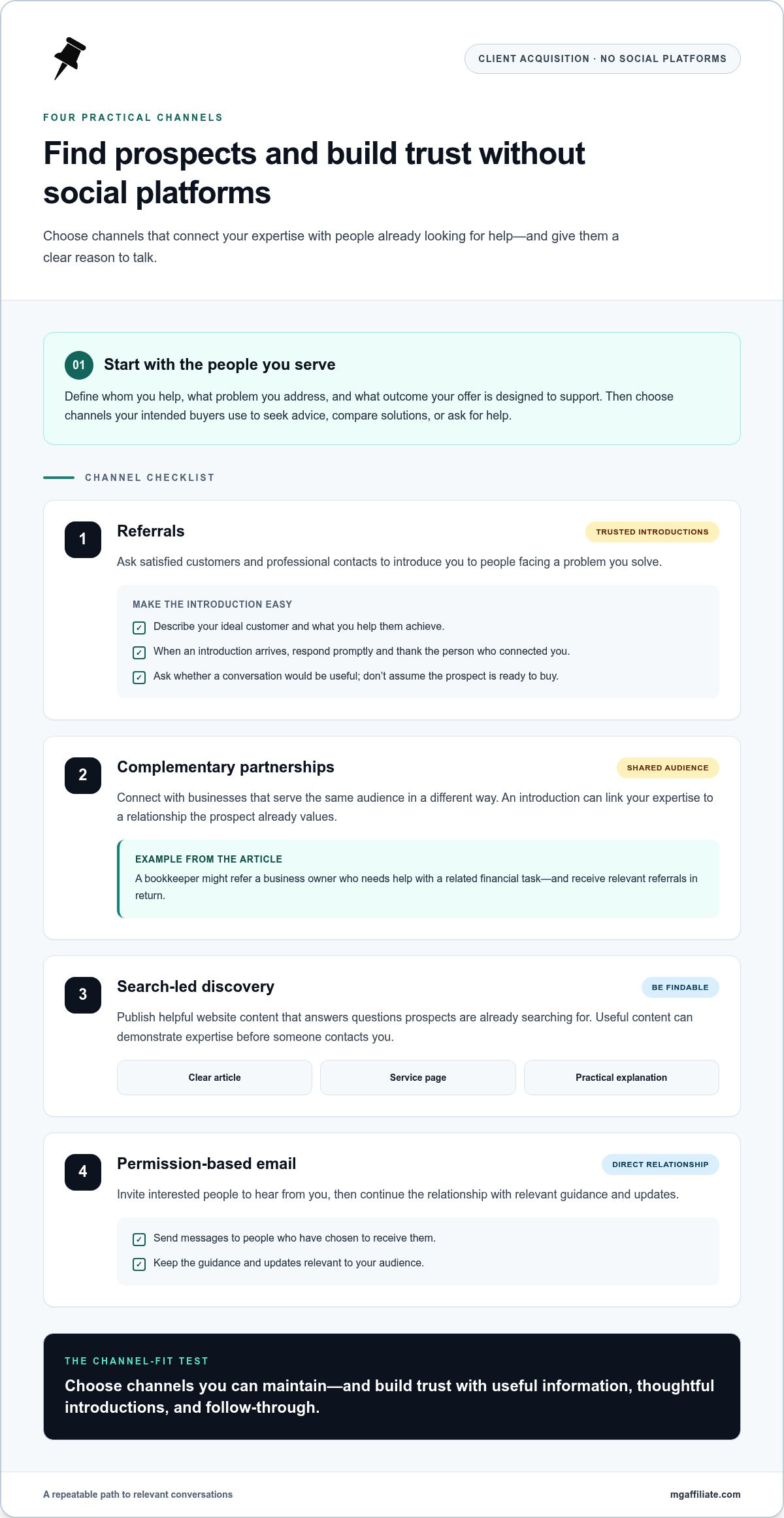
There isn’t one best channel for every business. The right choice depends on where your intended buyers seek advice, compare solutions, or ask for help. A local service provider may benefit from referrals and complementary partnerships, while a specialist with a clearly defined audience may attract prospects through useful search content. Choose channels you can maintain, then build trust by showing relevant expertise and giving people a natural next step.
- Referrals: Ask satisfied customers and professional contacts to introduce you to people facing a problem you solve. Make the request easy by describing your ideal customer and what you help them achieve.
- Complementary partnerships: Connect with businesses that serve the same audience in a different way. A bookkeeper, for example, might refer a business owner who needs help with a related financial task, while receiving relevant referrals in return.
- Search-led discovery: Publish helpful website content that answers questions prospects are already searching. A clear article, service page, or practical explanation can demonstrate expertise before someone contacts you.
- Permission-based email: Invite interested people to hear from you, then send relevant guidance and updates. Email helps you continue a relationship directly with people who have chosen to receive your messages.
How can referrals and partnerships create qualified introductions?
Referrals and partnerships transfer trust because an introduction connects your expertise to a relationship the prospect already values. Start with people who know your work or serve your intended customers. Give them a short, specific description they can pass along, such as, “I help independent retailers improve their inventory planning.” When an introduction arrives, respond promptly, thank the person who connected you, and approach the prospect respectfully. Ask whether a conversation would be useful rather than assuming they’re ready to buy.
How can search and email support client acquisition?
Search content works best when it addresses real questions, not just broad industry topics. Write a page that explains a common challenge, offers a useful first step, and makes clear whom you help. Build trust with relevant examples or an explanation of your approach, without overstating what it can deliver. Email can then nurture people who actively subscribe, with practical messages that help them understand their options. Don’t treat a purchased or scraped list as permission to contact people.
To make how to get clients without social media actionable, select one or two channels to test first. Keep a simple record of who introduced a prospect, which content brought an inquiry, and whether a conversation followed. That feedback helps you improve your message and focus on sources that produce relevant opportunities, rather than chasing activity for its own sake.
If refining your offer is part of building trust with prospects, explore the business growth resources at MG Affiliate, including the Make More Offers Challenge, a five-day business intensive focused on crafting offers to increase income.
Which Non-Social Client-Getting Channel Should You Choose First?
Choosing how to get clients without social media doesn’t mean trying every alternative at once. Start with how your buyers make decisions, what relationships or expertise you already have, and how much time you can commit to follow-up. The comparison below is a starting point, not a promise: response times and results depend on your audience, offer, and consistency.
| Channel | Audience access | Setup effort | Relationship depth | How quickly feedback may arrive |
|---|---|---|---|---|
| Referrals | People connected to satisfied customers or professional contacts | Low to moderate; clarify who you help and make introductions easy | Often high, because trust can come through the introduction | May be relatively quick when a suitable introduction is available |
| Partnerships | Customers of complementary businesses | Moderate; find aligned partners and agree on a useful way to connect | Builds over time through shared credibility and collaboration | Varies with partner fit and how often relevant needs arise |
| Search content | People looking for answers or solutions online | Moderate to high; create useful pages and maintain them | Grows as prospects learn from your expertise | Can take time; search visibility and inquiries aren’t immediate or guaranteed |
| People who have chosen to receive your messages | Low to moderate; create a clear opt-in and relevant follow-up | Deepens through consistent, useful communication | Replies may arrive quickly, though engagement varies | |
| Direct outreach | Specific prospects you identify as potentially relevant | Moderate; research, personalize, and follow up respectfully | Starts one-to-one and depends on the relevance of your approach | Responses can offer early feedback, but timing varies |
How do business type and buyer behavior affect channel choice?
Match the channel to the way a buyer prefers to move forward. Relationship-led offers, such as work that depends on confidence and fit, may benefit from trusted introductions and complementary partnerships. Buyers who research independently may respond to useful, searchable answers and a landing page that clearly explains the next step. For complex offers, allow room to educate prospects and talk through their situation before they decide. The goal isn’t to force a channel; it’s to meet buyers in a way that suits their decision process.
How do you choose a channel you can sustain?
Take inventory before you commit. Do you already have customers willing to refer, relationships with complementary businesses, knowledge you can turn into helpful content, or time to research prospects and follow up? Choose one primary channel that fits those strengths, then add one supporting channel that helps prospects take the next step. For example, referrals could lead people to a focused website page, while search content could invite interested readers to join your email list.
Run a small, manageable test rather than launching everything together. Track relevant inquiries, the quality of conversations, and whether prospects fit your offer. Views, clicks, and messages sent provide context, but they don’t tell the whole story. Review what prompted a meaningful response, adjust your approach, and keep the channels you can consistently support.
A 30-Day Plan to Start Getting Clients Without Social Media
A plan works when it fits the time and energy you can consistently give it. This 30-day sequence is designed to create a clear starting point, not guarantee a certain number of leads or clients. Adapt the activities to your business and focus on learning which actions lead to relevant conversations.
Define your audience, prepare your message, reach out with relevance, and review the results. Those four phases turn how to get clients without social media into a manageable process you can repeat and improve.
Week one: Define the offer and the people you want to reach
Write a one-sentence offer that names the buyer, the problem, and the value you aim to provide. For example: “I help independent retailers improve inventory planning so they can make more informed purchasing decisions.” Keep it specific enough that a potential customer or referral partner can recognize who may benefit.
Next, choose one primary channel and one supporting channel based on your existing relationships, skills, and capacity. List a few past customers you could reconnect with, potential referral sources or complementary businesses, and questions buyers commonly ask. These lists give you a focused place to start instead of a broad, intimidating marketing to-do list.
Week two: Prepare the basics
Make it easy for an interested person to understand what you do and what to do next. Prepare a straightforward website page or landing page that describes the offer, who it’s for, and a clear next step, such as replying to you or requesting a conversation. You don’t need a complex site to make the path understandable.
Draft a short introduction you can adapt for a referral request, partnership conversation, or direct message. Keep it personal and relevant. If search content is your supporting channel, outline one useful page that answers a question buyers already ask. Prepare only what you can maintain and follow up on.
Week three: Reach out and start conversations
Use your chosen channel to begin a realistic number of thoughtful conversations. That might mean reconnecting with a past customer, approaching a complementary business about a relevant introduction, or contacting a prospective buyer with a clear reason for reaching out. Personalize each message. Explain why you’re contacting that person, offer a useful next step, and leave room for them to decline.
Record each interaction in a simple spreadsheet or CRM. Note the date, source, prospect’s needs, next follow-up, and outcome. This small habit prevents promising conversations from slipping through the cracks.
Week four: Follow up, review, and adjust
Follow up with context, not pressure. Refer to the earlier conversation, share something useful if it fits, and suggest a relevant next step. Then review the month: Which sources produced qualified inquiries? Which messages earned meaningful replies? Did follow-ups happen when planned? Track conversations, qualified inquiries, follow-ups, and outcomes. Adjust one variable, such as your audience description or opening message, and continue testing.
If your outreach is creating conversations but your offer needs sharpening, explore offer-building resources at MG Affiliate, including the Make More Offers Challenge, a five-day business intensive focused on crafting offers to increase income.
Turn Non-Social Leads into Clients with a Clear Offer and Next Step
A prospect’s reply is a starting point, not a cue to deliver a sales pitch. Whether someone came through a referral, your website, or direct outreach, take time to understand what they need before recommending a solution. A clear, respectful process helps turn interest into a useful decision, even when you rely on a small number of channels. Fewer channels don’t automatically mean fewer opportunities. Relevance and consistent follow-through help you make the most of the conversations you start.
What should happen after a prospect responds?
Move the conversation forward in a few deliberate steps. Listen first, explain only what fits, then agree on a specific next action. For example, if a business owner asks about help improving operations, ask what feels most urgent, what they’ve already tried, and what a good outcome would look like. Their answers help you decide whether your offer is relevant instead of making assumptions.
- Clarify the situation. Ask a focused question about the prospect’s needs, priorities, or current challenge. Keep it conversational, and give them space to explain.
- Present a relevant offer. Describe in plain language who it suits, what problem it addresses, and what the prospect can expect from the process. Avoid jargon and claims you can’t support.
- Agree on a next step. Decide together whether to schedule a deeper discussion, review details, or pause. If you plan to follow up, agree on when and how, instead of leaving the conversation open-ended.
A useful next step isn’t always a sale. Sometimes the prospect needs more information, time to decide, or a different kind of help. Be clear about what you’ll send or do next, then follow through as promised. If the offer isn’t a fit, say so respectfully. That honesty protects trust and keeps the conversation focused on the prospect’s needs.
How can a stronger offer support the acquisition system?
A clear offer makes it easier for prospective buyers to understand why a conversation could be worthwhile. It also helps referral partners recognize who may benefit and describe your work accurately. When the offer is vague, introductions become harder to make and prospects may struggle to see how your work relates to their problem. Sharpening the value doesn’t replace discovery. It gives you a clearer starting point for it.
The Make More Offers Challenge is a five-day business intensive that helps entrepreneurs craft offers to increase their income. Its lessons can help you think through how to present an offer clearly and communicate its value. As with any educational resource, applying what you learn is part of putting it to work.
Explore MG Affiliate resources to learn more about the challenge. Then put your acquisition system to work by asking one thoughtful question, making a relevant offer, and agreeing on a clear follow-up.
Build the Next Step Into Your Growth
Your next stage of growth doesn’t depend on adding more marketing tasks. It depends on making each step easier to repeat: start a relevant conversation, understand what the prospect needs, and help them see whether your offer fits. Choose one action you can take this week, such as reconnecting with a potential referral source or clarifying the next step on your website. Then follow through and learn from the response.
If you want to strengthen the offer behind those conversations, the Make More Offers Challenge is a five-day business intensive that helps entrepreneurs craft offers to increase their income. Use it as a learning resource for developing an offer prospects can understand and value.
Explore the Make More Offers Challenge and choose one practical idea to put into action. You don’t need to be everywhere to build momentum. Start with a clear offer, a focused channel, and the next conversation you’re ready to begin.
Frequently Asked Questions
Can you get clients without social media?
Yes, businesses can find clients through referrals, partnerships, search, email, networking, and direct conversations. The practical answer to how to get clients without social media is to choose a channel your likely buyers already use, then make it easy for them to take a next step. For example, a consultant might ask a professional contact for a focused introduction and note whether that leads to a relevant conversation.
How do I get my first clients if I have no audience?
You can start without an established audience by focusing on people and organizations already connected to the customers you want to serve. If you help new business owners, for example, consider whether accountants, bookkeepers, or local business groups regularly meet them. Share a useful insight, explain whom you help, and make a personal introduction request. Treat early conversations as a way to learn which problems people recognize and how they describe them.
How many marketing channels should a small business use at once?
There’s no single number that suits every business. If you’re working alone, testing a primary channel and one supporting channel can make it easier to keep up with replies and see where inquiries come from. A business with a team may have more capacity, but adding channels still takes time to manage. Before expanding, review whether current activity is producing conversations with people who fit your offer.
What should I say when asking someone for a referral?
Make your request specific and easy to act on. You could say, “I help independent retailers improve their inventory planning. If you know an owner who’s struggling to keep popular items in stock, would you be comfortable introducing us?” This gives the person a clear picture of who might benefit without asking them to recommend you to everyone. Let them adapt your wording, and thank them whether or not an introduction happens.
Does email marketing work if I do not use social media?
Yes, email can help you stay in touch with people who have chosen to hear from your business. For example, a short email could answer a common customer question, share a useful checklist, or explain a new step in your process. Make the reason for each message clear, and keep the content relevant to the person’s interests. Email supports a relationship; it doesn’t create an audience or guarantee that readers will become clients.
How can I tell whether a non-social marketing channel is working?
Track the path from the first interaction to the outcome. Record where each inquiry came from, whether the person matched your intended customer, what follow-up took place, and whether the conversation led to a proposal or client. For instance, a referral source may send fewer inquiries than a website page, but those inquiries may be a closer fit. Compare relevance and outcomes with the time you invest, then adjust one part of your approach.
Do I need a website to get clients without social media?
No, you can start with referrals, professional relationships, or direct conversations without a website. A focused page can still help prospects who want to learn more before replying. Include a plain-language description of whom you help, the problem you address, and a way to take the next step. Keep it consistent with what you say in conversations, then respond personally to inquiries instead of expecting the page to do the selling on its own.
Leave a Reply