

Selling high-ticket offers on social media takes more than a persuasive post. Educational content, credible proof, and useful conversations help potential customers understand what an offer includes and whether it fits their needs.
A higher price often brings practical questions: What will I receive? Is this right for me? Why should I trust this offer? Address those concerns clearly rather than trying to overcome them with pressure. This article explains how social media can support high-ticket sales, how to communicate an offer’s value, and how buyers can make an informed decision. You’ll learn to build trust, shape a compelling offer, and guide interested people toward a clear next step.
Key Takeaways
- Use useful educational content and genuine proof to help potential buyers understand your expertise before they’re ready to decide.
- Shape a social media sales funnel around relationship-building and informed conversations, rather than relying on a single promotional post.
- Explore how higher-value offers can support business growth, while keeping the customer’s needs and the value delivered at the center.
- Make your offer easier to evaluate by clearly communicating who it serves, what it includes, and why its value matters.
1. Building trust with educational content and social proof
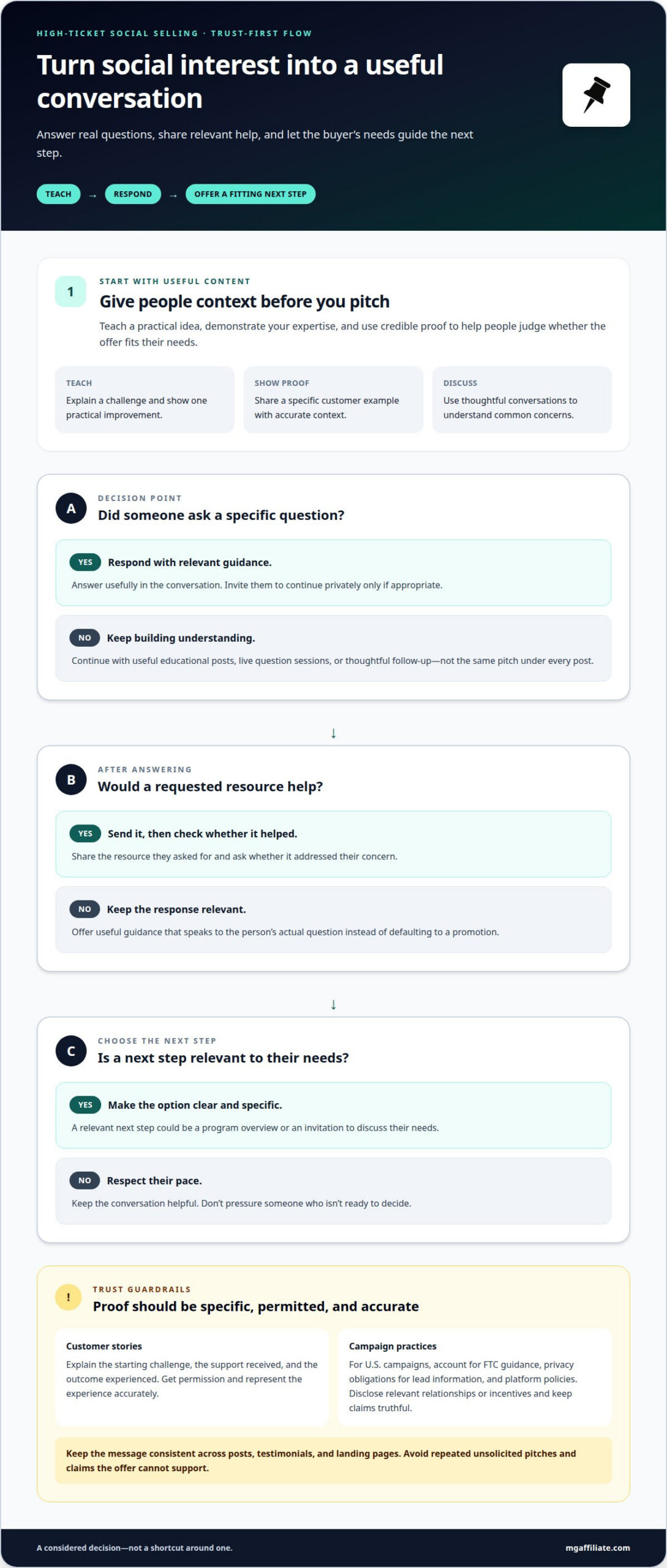
Start with a teaching sequence, not a pitch. A business coach, for example, could explain how to identify a costly workflow problem, demonstrate one practical improvement, and then show how a paid program addresses the wider challenge. This gives potential buyers a useful way to assess the coach’s expertise and judge whether the solution suits their needs.
Use testimonials to add context, not to make sweeping promises. A useful customer story explains the person’s starting challenge, the support they received, and the outcome they experienced. Pair a written testimonial with a specific example, such as how a consultant helped a client organize a launch plan. Get permission before sharing someone’s words, and represent their experience accurately.
Build community through thoughtful discussion. A creator might host a live question session about launching a service, then answer audience questions in follow-up posts. Respond with relevant guidance instead of repeating the same pitch under every post. These exchanges can reveal common concerns and help you maintain customer relationships. Share useful updates that support customers’ next steps, too.
For U.S. campaigns, account for FTC guidance on truthful endorsements, privacy obligations related to lead information, and each platform’s policies for ads, testimonials, and direct messages. Explain relevant relationships or incentives, handle personal information carefully, and make sure promotional claims accurately reflect the offer. Keep the message consistent across posts, testimonials, and landing pages.
Turn interest into a helpful conversation. When someone asks a specific question in a comment, answer usefully and invite them to continue privately if appropriate. Send the resource they requested, then ask whether it addressed their concern. A relevant next step could be a program overview or an invitation to discuss their needs. This respectful sequence supports selling high-ticket offers on social media without pressuring people who aren’t ready.
2. Why Social Media for High-Ticket Sales?
High-ticket sales generally involve offers priced above $1,000. The threshold matters because buyers often need more context before making a substantial purchase. A regular sales funnel may move from a product post to checkout. A high-ticket funnel usually needs additional steps, such as exploring the offer, reviewing evidence, asking questions, and discussing fit.
Social media brings useful content and conversations together. A LinkedIn post can explain a complex business service, while an Instagram demonstration can show a product in use. Posts, live sessions, and direct replies give prospects different ways to understand an offer before deciding. The aim is not to force a quick purchase, but to make the next step clear.
Choose platforms based on where your audience seeks advice and which format best demonstrates your value. LinkedIn can suit professional offers, while Instagram or YouTube can help showcase visual products and expertise.
To move a prospect toward a sales call, answer their specific question, share a relevant resource, and invite them to discuss their needs. A customer relationship management (CRM) system can track each lead’s source, conversation, follow-up tasks, and stage. These records help prevent missed replies and make handoffs easier.
Measure meaningful stages, not likes alone. Track qualified inquiries, booked calls, attendance, and sales. Compare results by platform and content type, then focus more effort on the sources that generate relevant conversations. As activity grows, consistent CRM fields and follow-up steps help keep the process manageable.
Common risks include chasing engagement from unlikely buyers, sending repeated unsolicited pitches, and making claims the offer can’t support. Protect trust by keeping messages relevant, respecting people’s choices, and describing outcomes accurately. Social media works best as a path to a considered decision, not a shortcut around one.
3. Benefits of selling high-ticket products and services
A higher-value offer can make each completed sale more meaningful to your business. It may also allow you to deliver a more complete solution, such as a strategy program with lessons, implementation tools, and group support. The benefit depends on matching the offer’s scope to a real customer need, not simply raising its price.
Revenue per sale is only one consideration, and it isn’t the same as profit. Before scaling a coaching program, account for delivery time, customer support, platform costs, and the work involved in attracting suitable buyers. Understanding these inputs helps you assess whether the offer can grow sustainably and where its delivery could improve.
A high-value offer can also make room for deeper customer outcomes. A consultant helping small businesses improve their sales process might offer structured guidance over time rather than a single downloadable checklist. The customer gets a more involved experience, while the seller can build an ongoing relationship through useful progress reviews and relevant next steps.
Consider Dorie Clark’s first course: it earned $269,000 during its first 18 months. That result illustrates the potential of a focused educational offer, not a forecast for every creator. A course succeeds when its audience sees a meaningful fit between the learning experience and the challenge they want to solve.
Social media can help you learn what customers value before refining an offer. A business might review recurring questions in comments, then use those themes to improve a workshop’s examples or lessons. This feedback can make the offer clearer and more relevant, while helping the business avoid adding features customers don’t need.
Choose a high-ticket model for the value and delivery it supports, not as a shortcut to growth. Map the customer’s desired progress, the support required, and the resources needed to deliver it. When these elements align, the offer can strengthen customer relationships and support a more intentional business model.
4. Making high-ticket offers compelling
Make the offer concrete before making it persuasive. Describe the customer, the problem, and what they receive. A leadership program, for instance, might include guided lessons, planning templates, and group discussions. Explain how each element supports the buyer’s goal. Specific components help prospects understand the offer and decide whether it fits.
Position the offer around a specific transformation, not a sweeping promise. A business coach could focus on helping independent consultants build a repeatable sales process. Explain the method, the support included, and the work customers need to contribute. Don’t imply every buyer will get the same results. Precision builds credibility and helps the right prospects recognize the fit.
How should you price and position the offer against competitors? Set a price that reflects delivery costs, expertise, support, and the value customers receive. Then differentiate through your approach, audience fit, and inclusions, rather than attacking alternatives or claiming superiority without evidence.
Use social content to make those differences visible. A carousel can outline your method, while a live session can walk through a sample decision. A clear offer page can explain eligibility, format, included support, and next steps. Keep the messaging consistent so prospects don’t see one promise in a post and another in a sales conversation.
Address objections with useful specifics. If prospects ask whether a program suits beginners, explain the knowledge they’ll need and show a sample lesson. If they ask about implementation, describe the guidance available and what participants do themselves. Clear answers help buyers assess fit without pressure and show where your offer description could be more precise.
Turn this structure into a stronger offer with practical offer-building strategies. Lead with the customer’s desired progress, support every claim with relevant detail, and make the next step easy to understand.
MG Affiliate: Click and Sell Almost Anything
MG Affiliate’s Click and Sell Almost Anything can help if you’re exploring how to present offers and build sales through social media. Use the principles in this guide to clarify what you want to sell, who it serves, and how you’ll communicate its value. Then explore whether this resource fits your next learning goal.
For broader business and wealth-building learning, MG Affiliate offers BOSS Moves Book, From Trash Man to Cash Man Book, and The B.E.S.T. Wealth Network. Each offers a distinct avenue to explore as you shape your direction, not a substitute for a clear, customer-focused offer.
Explore Click and Sell Almost Anything through MG Affiliate.
Choose Your Next Move
Turn your ideas into one clear action: refine an offer, identify its audience, or plan a useful piece of content. Learning to sell high-ticket offers on social media takes practice. Each conversation can reveal what buyers value and what they still need to understand.
For structured support in developing offers, explore Make More Offers Challenge – General Admission or Make More Offers Challenge – VIP Experience. For additional business inspiration, consider BOSS Moves Book. Choose the resource that fits the work you’re ready to do next, and keep your customer’s needs at the center of each decision.
Contact MG Affiliate to discuss your needs and explore a next step that fits your goals. Keep building with purpose, and let clear value guide your growth.
Frequently Asked Questions
What are some examples of high-ticket products or services, and how are they marketed?
Examples of high-ticket offers include enterprise software implementations, custom home renovations, executive education, and specialized business programs. Market them by explaining what buyers receive and how the purchase process works. A software company, for instance, could publish a product walkthrough, outline implementation stages, and share a customer case study. This helps prospects understand the solution and the commitment involved before speaking with sales.
Why Social Media for High-Ticket Sales?
Social media helps prospects discover a business and explore its expertise before starting a direct conversation. A founder might discuss a business challenge on LinkedIn, then host a live session to answer audience questions. These interactions can reveal what matters to potential buyers and help shape follow-up. Use platform insights to see which posts prompt relevant inquiries, not just broad attention.
Can digital marketing effectively promote high-ticket items, and what techniques are most successful?
Yes. Digital marketing can connect a detailed offer with people researching a specific solution. A company selling enterprise software, for example, could publish comparison guides, product demonstrations, and an implementation checklist. A targeted email sequence can then share more information with subscribers who request it. Focus each resource on a real buyer concern, and make the next step clear without overstating results.
How can businesses attract high-ticket customers or clients online?
Attract suitable prospects with content about the challenges your offer addresses. A custom renovation firm could share design decision guides, material comparisons, and project-planning examples. Use relevant search terms and social posts to help interested people find these resources. A focused inquiry form can ask about goals, constraints, and timing, giving your team context for a useful first conversation and helping filter out poor-fit inquiries.
What are the tasks to automate in high-ticket sales?
Automate repeatable administration, such as recording form submissions, assigning leads in a customer relationship management system, scheduling reminders, and sending requested resources. After someone downloads a planning guide, for example, an automated email can deliver it and explain how to book a conversation. Keep personal discussions, needs assessment, and recommendations human-led. Review automated messages regularly to keep them accurate, relevant, and easy to opt out of.
What is a high-ticket offer?
A high-ticket offer is a product or service positioned at a higher price point and usually involving a substantial purchase decision. It might be a specialized service, a business program, or a complex product. Its value should be clear in its scope, delivery, and fit for the customer, rather than resting on a premium label alone.
Leave a Reply