

What if your next client doesn’t need a polished funnel, but a clearer reason to talk with you? If you’re wondering how to sell services without a complex funnel, start by simplifying the path from interest to a decision. It’s understandable to feel buried by tools, follow-up steps, and messaging that leaves prospects unsure what you actually do. More technology won’t fix an unclear offer.
You can make selling simpler. Explain who your service helps, what problem it addresses, and what a prospective client can do next. Then use a direct conversation and thoughtful follow-up to help the right people decide whether it’s a fit.
In this guide, you’ll learn how to describe your service in plain language, invite interested prospects into a useful sales conversation, and follow up without building an elaborate system. You’ll also see how to create a repeatable route from first interest to a clear decision, using only the tools you need. A simple sales process can give you more confidence and your potential clients more clarity.
Key Takeaways
- Learn why a clear offer matters more than adding sales tools before you need them.
- Make your service easier to understand by stating who it helps, what it covers, and what buyers can do next.
- Compare a direct conversation, a simple service page, and light follow-up to find a sales path that fits.
- Use a repeatable four-step process to guide interested prospects toward a clear decision without pressure tactics.
- Learn how to sell services without a complex funnel, and when missed inquiries or uneven follow-up suggest it’s time to add a helpful tool.
How to sell services without a complex funnel starts with clarity
A long chain of marketing tools and stages can make selling feel like a technology project. A funnel can help organize how buyers discover and consider an offer, but it isn’t a requirement for every business. The traditional purchase funnel describes stages a buyer may pass through. How many tools you use to support those stages is a business choice, not a measure of how professional your service is.
It’s reasonable to feel frustrated if setting up and maintaining every step takes attention away from serving clients. That doesn’t mean funnels are ineffective. It means your sales process should fit your offer, your buyers, and the way people make decisions about your service. Even a simple approach needs three essentials: a clear offer, a way for buyers to connect with you, and reliable follow-up.
Selling simply means guiding a suitable buyer toward an informed next step. The goal isn’t to remove useful support. It’s to make the path clear without adding stages that don’t help the buyer or your business.
What does selling a service without a funnel mean?
It means using a direct sales process, not having no process at all. For example, a prospective client inquires about bookkeeping. You ask a few questions about their needs, recommend a suitable scope of work, and agree on what happens next. That next step might be confirming the scope, considering a proposal, or deciding it isn’t the right fit.
The right path depends on what buyers need to understand and how involved the service is. A straightforward service may need a clear description and a short exchange. A customized project may call for a longer conversation. Keep the steps that help both sides make an informed decision.
When is a simple sales process a sensible starting point?
For solo providers and small teams with limited time or technical resources, a direct approach can be easier to manage than several connected tools. Conversations also help you hear the questions buyers actually ask. Use that feedback to improve your explanation before investing time in automation.
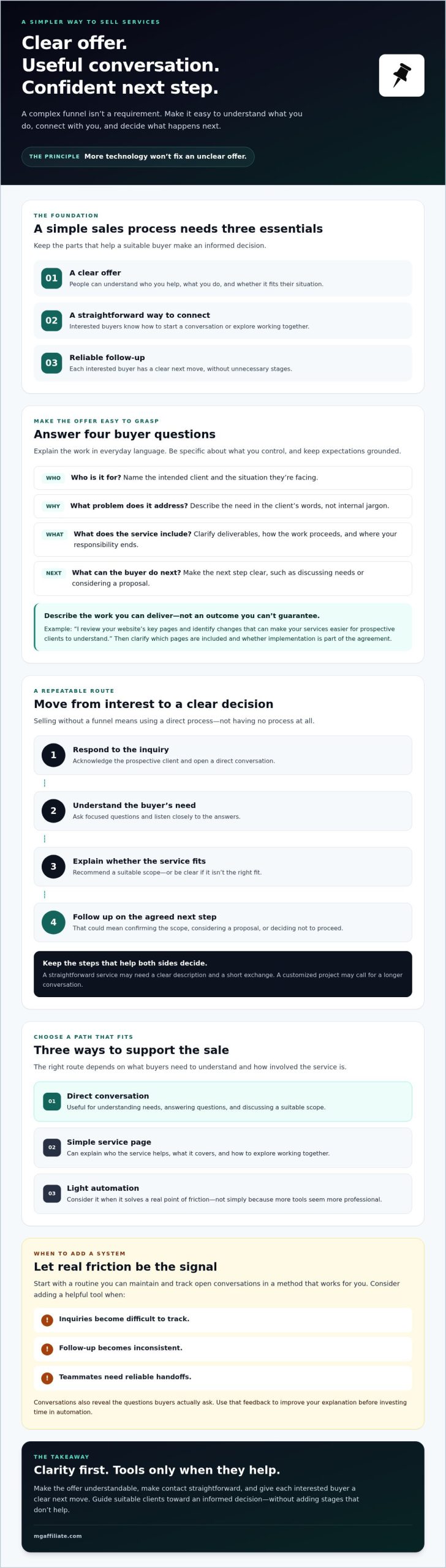
Start with a simple routine: respond to an inquiry, understand the buyer’s need, explain whether your service fits, and follow up on the agreed next step. Track open conversations in a method you can maintain. If inquiries become difficult to track, follow-up becomes inconsistent, or teammates need reliable handoffs, those are practical signs to consider adding a system.
That’s the foundation of selling services without a complex funnel: make the offer understandable, make contact straightforward, and give each interested buyer a clear next move. Build only what solves a real point of friction.
Build a service offer buyers can understand before adding sales technology
Before choosing a platform, make sure prospective clients can understand what you do and whether it fits their situation. A clear offer names the intended client, the problem you address, what the service includes, and the next step to explore working together. Buyers need to understand fit, scope, and process before they can make an informed decision.
Be specific about what you’ll deliver, how the work will proceed, and where your responsibility ends. For example, you might say that a website review includes an assessment of selected pages and a written list of recommended improvements. Avoid promising a particular increase in traffic or sales unless you can substantiate that outcome and clearly explain the conditions involved.
How do you explain a service in buyer-friendly language?
Use the client’s situation and everyday words, not internal jargon. Replace “We deliver strategic digital optimization” with a concrete explanation: “I review your website’s key pages and identify changes that can make your services easier for prospective clients to understand.” Then clarify which pages are included, what the client receives, and whether implementation is part of the agreement.
That level of detail helps people assess fit without guessing. It also keeps expectations grounded: describe the work you control, not a result you can’t guarantee. If you’re refining a premium offer, explore this high-ticket offer creation guidance as an educational resource.
How can you qualify a prospective service client?
Qualifying isn’t about pressuring someone to buy. It’s a respectful way to check whether your service addresses their need and whether the scope is workable. Ask focused questions, then listen closely to the answers.
- “What would you like help with?”
- “Is there a timeframe you’re working toward?”
- “What have you already tried?”
- “Who else should be involved in deciding on the next step?”
If the person needs work outside your expertise or expects deliverables your service doesn’t include, say so before proposing a commitment. Explain what you can take on, what would require a separate agreement, or why your offer may not be the right fit. That clarity protects both sides and gives the buyer a fair basis for deciding.
This is a practical foundation for selling services without a complex funnel: make the offer clear, discuss fit openly, and agree on a specific next step. For more learning about offers and online selling, explore the educational resources at MG Affiliate.
Choose a simple sales path: direct conversation, service page, or light automation
There’s no single best channel for every service. Choose the path that matches how buyers prefer to evaluate your work and how much explanation the decision requires. A referral may build trust, a service page can answer common questions, and a conversation can help clarify a customized project. These options can work together without becoming a complicated sequence of tools.
Which sales channel fits your service and buyer?
Use referrals or thoughtful personal outreach when context and trust play a strong role in the decision. An introduction from someone who understands the buyer’s needs can open a useful conversation. Keep the next step simple, such as asking what the prospect is looking for and whether they’d like to discuss fit.
A service page is useful when buyers have recurring questions. Explain who the service is for, what’s included, how the process works, and how to inquire. It can give prospects enough information to decide whether a conversation makes sense, without requiring you to repeat the basics each time.
Consider an introductory call when the work is customized, the buyer’s situation needs discussion, or the scope depends on details you can’t assess from a form. If the service is straightforward and the page answers the main questions, a live conversation may be unnecessary before an inquiry. Let buyer needs and service complexity guide the choice.
What should you automate, and what should remain personal?
Automation works best after you understand and have tested the steps it will support. First, handle inquiries manually for a while. Notice which tasks repeat, where prospects get stuck, and what questions need a personal answer. Then consider automating routine administration, such as sending a confirmation, sharing scheduling information, or reminding yourself to follow up.
- Good candidates for light automation: appointment confirmations, basic inquiry acknowledgments, and follow-up reminders.
- Keep personal: understanding a buyer’s situation, making a tailored recommendation, and responding to sensitive or nuanced questions.
A form or automated reply can collect useful details, but it can’t diagnose a buyer’s needs or make an unclear offer easier to understand. Keep human judgment where it matters. To decide how to sell services without a complex funnel, start with the channel your buyers already use, test the process yourself, and add a tool only when it removes a specific point of friction.
Use a repeatable four-step process to turn service interest into a decision
A simple sales process gives you a steady way to respond without turning every inquiry into a script. Keep the conversation focused on the buyer’s needs, explain your recommendation clearly, and agree on what happens next. The aim isn’t to persuade everyone. It’s to help both sides make a sound decision.
Respond promptly, understand the need, recommend a suitable fit, and agree on a clear next action. Each step should make sense on its own, so the process stays useful whether a prospect reaches out by email, referral, or a service page.
How do you lead a useful service sales conversation?
Start by confirming what the prospect wants help with and what they need to decide. Ask focused questions, then summarize what you heard before suggesting a service. This gives the buyer a chance to correct misunderstandings and helps you avoid recommending work that doesn’t fit.
- Respond: “Thanks for reaching out. What would you most like help with?”
- Understand: “You’re looking to make your service easier to explain to prospective clients. Is that right?”
- Recommend: “Based on what you’ve shared, this service covers a review of your key pages and written recommendations. It doesn’t include implementing those changes.”
- Agree on an action: “Would you like me to send the scope for you to review, or is there something you’d like clarified first?”
Use plain language to explain fit, scope, and limitations. If your service doesn’t address the need, say so rather than forcing a recommendation. That honesty keeps the conversation useful, even if the prospect chooses a different solution.
How should you follow up without overwhelming a prospect?
Before the conversation ends, ask what next step would be helpful and when to reconnect, if follow-up is wanted. Then send a short recap that records the buyer’s stated need, your recommendation, any open questions, and the agreed action. For example: “Here’s the scope we discussed. You mentioned wanting help with your service page. Take a look when convenient, and let me know if you’d like to clarify anything.”
Respect the prospect’s decision and preferred way to communicate. Don’t invent a deadline or manufacture urgency. Keep a simple record, whether that’s a spreadsheet, notebook, or basic contact list, with the inquiry, conversation status, decision, and next follow-up. Choose a method you’ll actually maintain.
This routine puts how to sell services without a complex funnel into practice: make each interaction clear, relevant, and easy to continue or close. To explore educational resources for refining offers and sales conversations, learn about the Make More Offers Challenge.
Grow beyond a simple service-selling process only when the evidence supports it
A simple process doesn’t have to stay unchanged forever. But don’t add technology just because other businesses use it. Upgrade when you can point to a recurring problem, such as inquiries slipping through the cracks, inconsistent follow-up, prospects asking the same unanswered questions, or sales activity creating bottlenecks in service delivery.
Look for the cause before choosing a fix. Missed inquiries may call for a clearer way to record new leads, while repeated questions might mean your service page needs better explanations. If inquiries come from people who aren’t a good fit, review your offer and how you describe it before adding automation. More tools won’t correct unclear messaging or attract the right prospects on their own.
How can you tell whether your simple sales process needs an upgrade?
Review a basic record of where inquiries came from, how consistently you responded, what questions buyers asked, and what happened next. You don’t need a complicated reporting setup. A regular look at your notes can reveal patterns: perhaps referrals often need more context, or prospects routinely ask what a service includes.
Choose one response to the clearest issue. You might add a short explanation to your service page, create a follow-up reminder, or use a simple template for confirming next steps. Then observe whether that change reduces friction. Keep what helps, revise what doesn’t, and avoid adding several new systems at once.
What is a sensible next step for learning to sell services?
Test your offer and conversation flow with suitable prospects before assuming you need a larger system. Notice what buyers understand quickly, where they hesitate, and what information helps them make a decision. That feedback can guide your next improvement more reliably than building a process around guesses.
Education can support that work, but it isn’t a condition for selling effectively. If you want to develop your offer further, the Make More Offers Challenge is an optional educational resource. Review current program details before deciding whether it fits your learning goals.
Keep the principle simple: fix a demonstrated gap, then check whether your change helps. That’s how to sell services without a complex funnel while leaving room to grow when your actual needs change. Explore the Make More Offers Challenge as a next step in learning about offer development.
Put a clear, simple sales process into motion
You don’t need an elaborate funnel to help the right clients make a confident decision. Start with an offer people can understand, choose a straightforward way to connect, and guide each inquiry toward a clear next step. Keep track of where prospects get stuck, then improve the process only when you see a real need.
That’s the practical answer to how to sell services without a complex funnel: make it easy for a suitable buyer to understand the fit and move forward without unnecessary steps. Consistent, thoughtful conversations can give you a strong foundation before you add more technology.
If you’d like to keep developing your offer and sales approach, the Make More Offers Challenge is a recurring five-day virtual business intensive with General Admission and VIP Experience listed as access options. Review the current details to decide whether it suits your learning goals.
Your next step: Explore the Make More Offers Challenge if you’d like an educational resource for developing your offers. Then put your simple sales process into practice and learn from each conversation.
Frequently Asked Questions
Can I sell a service without a sales funnel?
Yes, you can sell a service without a formal funnel. Start with a clear offer, a way for prospective clients to contact you, a useful conversation, and respectful follow-up. That’s still a sales process, even without landing-page sequences, automated email campaigns, or multiple software tools. To sell services without a complex funnel, choose only the steps that help buyers understand whether your service fits and make an informed decision.
How do I sell my services directly to clients?
Explain who your service is for, what need it addresses, and what the engagement includes. Invite suitable prospects to ask questions or discuss whether the service fits. Listen before recommending anything, clarify boundaries, and agree on a next step. Referrals, professional networks, and a straightforward service page can help people find you. Keep your explanation specific so a potential client can see what you offer without having to interpret vague claims.
Do I need a website to sell a service?
No, a website isn’t always necessary to begin selling a service. Referrals, professional communities, or direct conversations may connect you with potential clients. A simple page can still help explain the intended client, service scope, process, and contact options in one place. Choose based on how your buyers look for information and what they need to know before reaching out. Make sure there’s a clear way for interested people to take the next step.
What should I say when offering my services to a potential client?
Start with a relevant reason for contacting them, then ask about their needs instead of assuming what they require. Briefly explain how your service may fit, what it covers, and what a next step could involve. For example, you might ask whether they’re open to discussing a particular challenge before describing your approach. Keep your message accurate and personal. Avoid promising results you can’t substantiate or pressuring someone to decide immediately.
How do I follow up with a service prospect without being pushy?
Refer to your conversation, recap the need or question they raised, and offer the next step you discussed. If you didn’t agree on timing, send a concise check-in that makes it easy for them to respond or decline. For example, ask whether they have questions about the scope you shared. Respect their preferred communication method and stop following up if they ask you to. A clear, considerate message is more useful than artificial urgency.
Can a simple sales process work for high-ticket services?
Yes, a simple process can work for high-ticket services, but simple doesn’t mean skipping important buyer questions or clear terms. A higher-commitment decision may need more discussion, evidence, or time to consider. Keep each step focused on the prospect’s needs and the actual scope of your service. Add steps when they help the buyer make an informed choice, not just to make your funnel appear more sophisticated.
When should I add automation to my service sales process?
Consider automation when a repeated administrative task causes delays or distracts from useful client conversations. First, make sure you understand the process manually. Then test one change, such as automating a scheduling confirmation or follow-up reminder, and check whether it reduces friction. Keep sensitive conversations personal where appropriate. Automation can support a clear offer and helpful process, but it can’t fix unclear messaging, poor-fit inquiries, or follow-up that doesn’t address buyers’ needs.
Leave a Reply